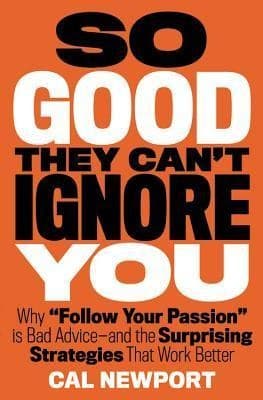
Reading note
What So Good They Can't Ignore You gets right about design work
Cal Newport's argument lands because it treats career strength as something built through rare and useful capability, not discovered through vague passion. That maps closely to how I think about product design in complex environments.
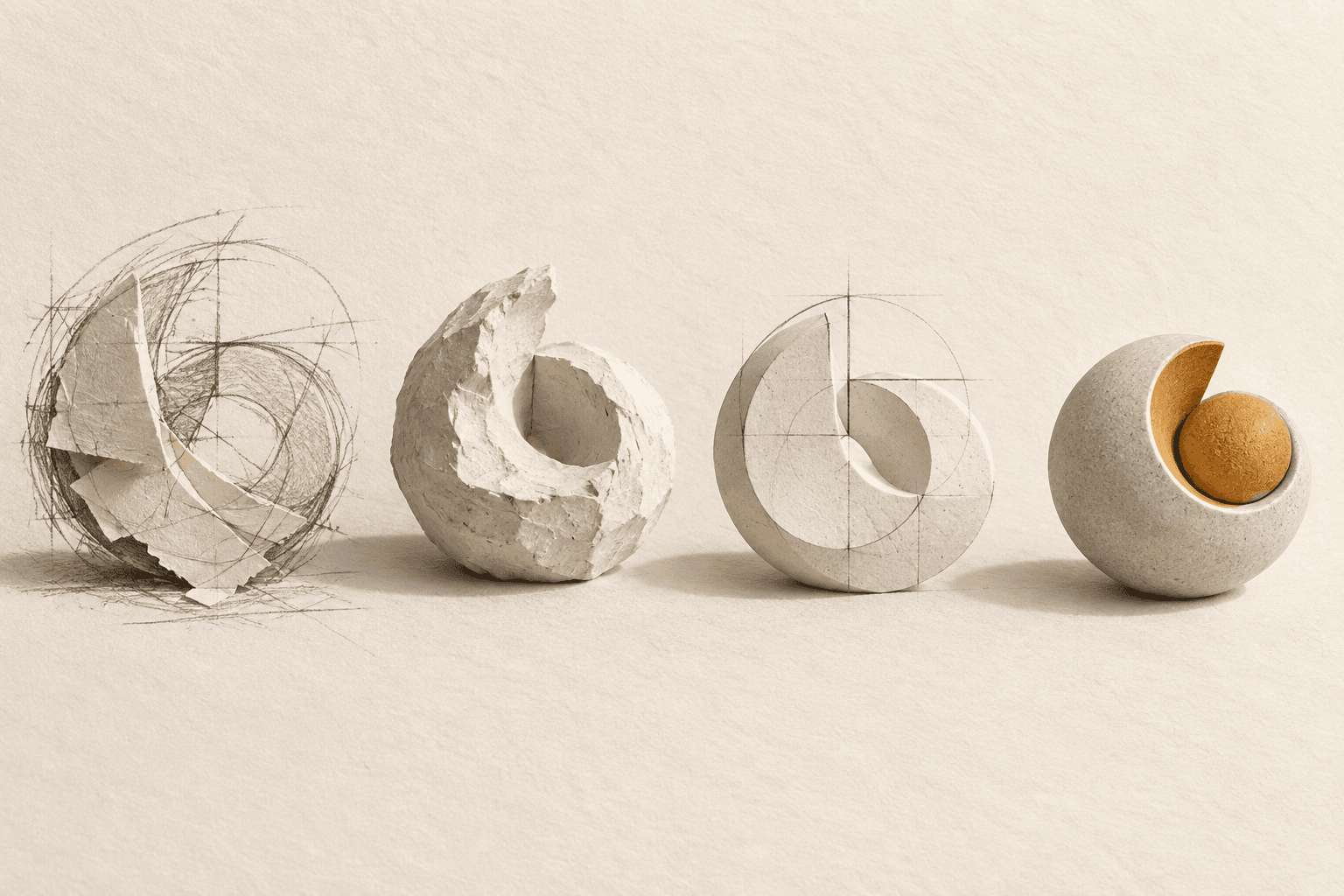
One reason this book still feels useful is that it pushes back on a familiar but weak story: that good work mostly comes from finding the one thing you already feel passionate about.
Newport's alternative is more grounded. He argues that meaningful work tends to come from building rare and valuable skills, then using that capability to gain more autonomy, more trust, and better opportunities over time.
That matches how I think about product design.
What feels true in it
The strongest part of the book is its emphasis on craft capital.
In design, that does not just mean making polished screens. It means becoming genuinely useful in ways that are harder to replace:
- clarifying product structure when the logic is messy
- making complex workflows easier to reason about
- prototyping behavior before implementation hardens the wrong model
- helping teams make better decisions across design, product, and engineering
That kind of value compounds. It also travels well across environments. It matters in startup ambiguity, embedded HMI, service ecosystems, enterprise tooling, and now increasingly in AI-supported product work.
Where it aligns with my own perspective
The book is most convincing when it treats good careers as an outcome of useful capability rather than self-expression alone.
That aligns with how I see senior design work. The important question is not only whether the work feels exciting. It is whether the designer is becoming more capable of handling complexity, shaping better decisions, and creating leverage for the team.
That is part of why I care so much about systems thinking. Systems thinking is not abstract maturity theater. It is one of the ways design becomes more valuable. When you can improve the structure underneath the interface, you create more impact than surface polish alone can deliver.
Why this matters in product design now
The book feels especially relevant in a moment where AI can accelerate parts of the design process quickly.
AI makes it easier to generate options, mock up directions, and move faster between idea and prototype. That is useful. But it also raises the bar on what counts as real design value.
If many people can produce acceptable output faster, the differentiator shifts even more toward judgment:
- knowing which problem is actually worth solving
- understanding where the product model is weak
- turning ambiguity into a clearer structure
- connecting Figma exploration, prototyping, and design-to-code work in a way that survives delivery
In that sense, AI does not weaken Newport's argument. It sharpens it. The durable advantage is still rare and useful capability. The shape of that capability just keeps evolving.
Where I would add nuance
I would not read the book as an argument for grinding silently until someone rewards you.
Useful capability matters, but so do context and judgment. Some environments help strong work compound. Others absorb it without creating much room to grow. So the goal is not just to become excellent in the abstract. It is to become excellent in ways that create better options and then use those options well.
That is the part I would emphasize for design careers. Build the skill, yes. But also pay attention to whether the environment lets that skill translate into trust, scope, and meaningful work.
The part I want to keep from it
The main idea I would carry forward is simple:
Career clarity often comes less from chasing a perfectly named passion and more from getting genuinely good at work that matters.
For product design, that usually means becoming the person who can bring more clarity to systems that are hard to understand, hard to operate, or hard to scale. That is a stronger foundation than enthusiasm alone, and it is a more durable one too.